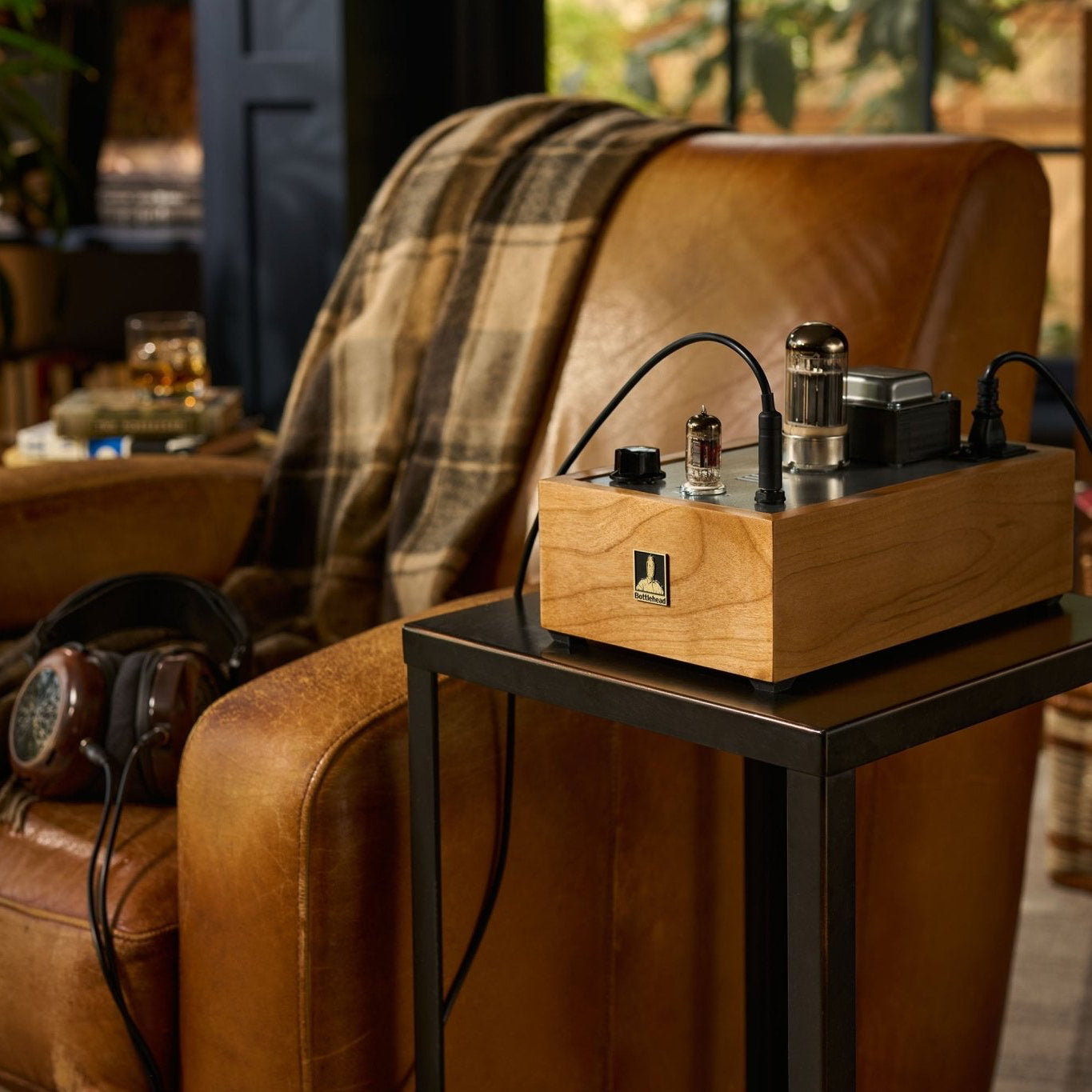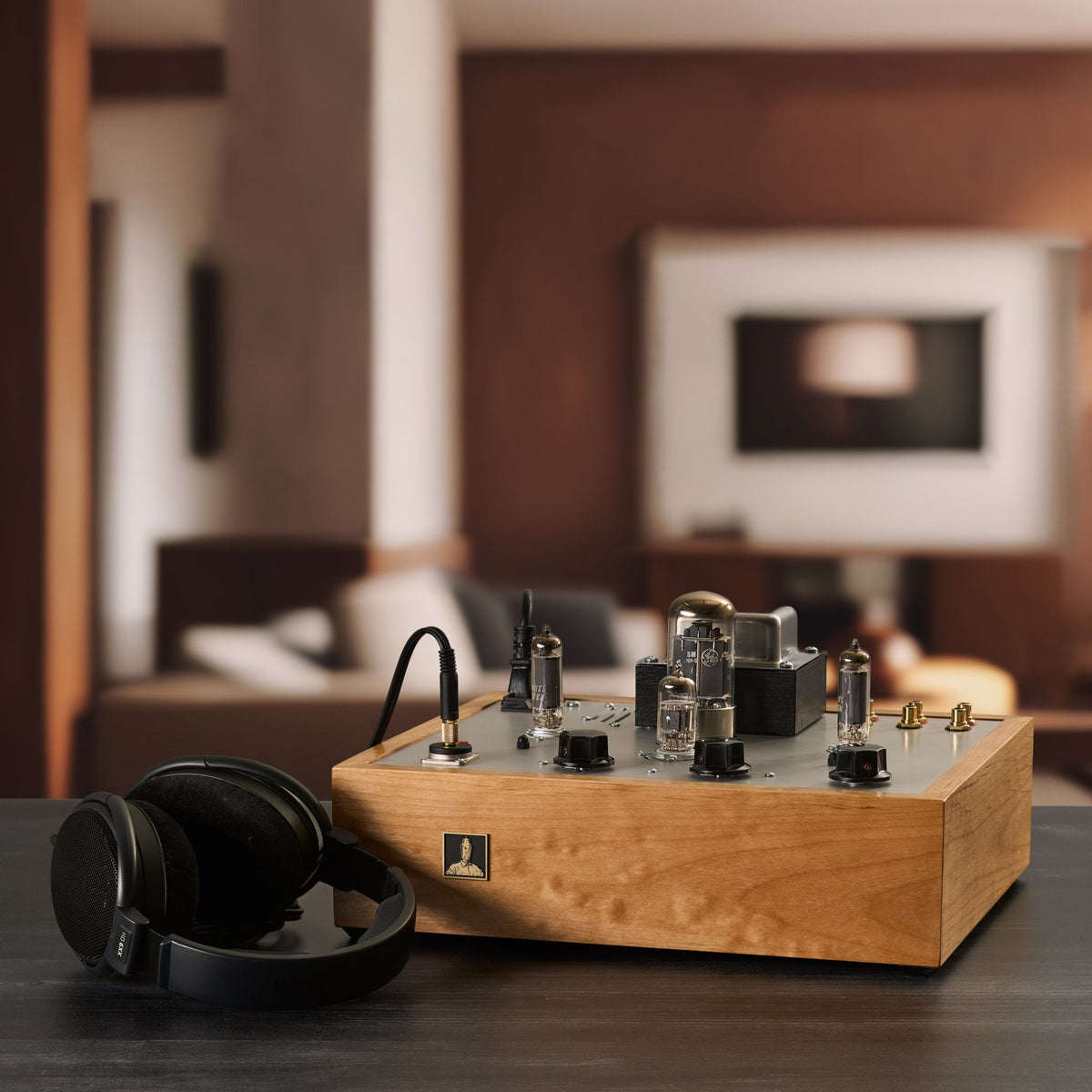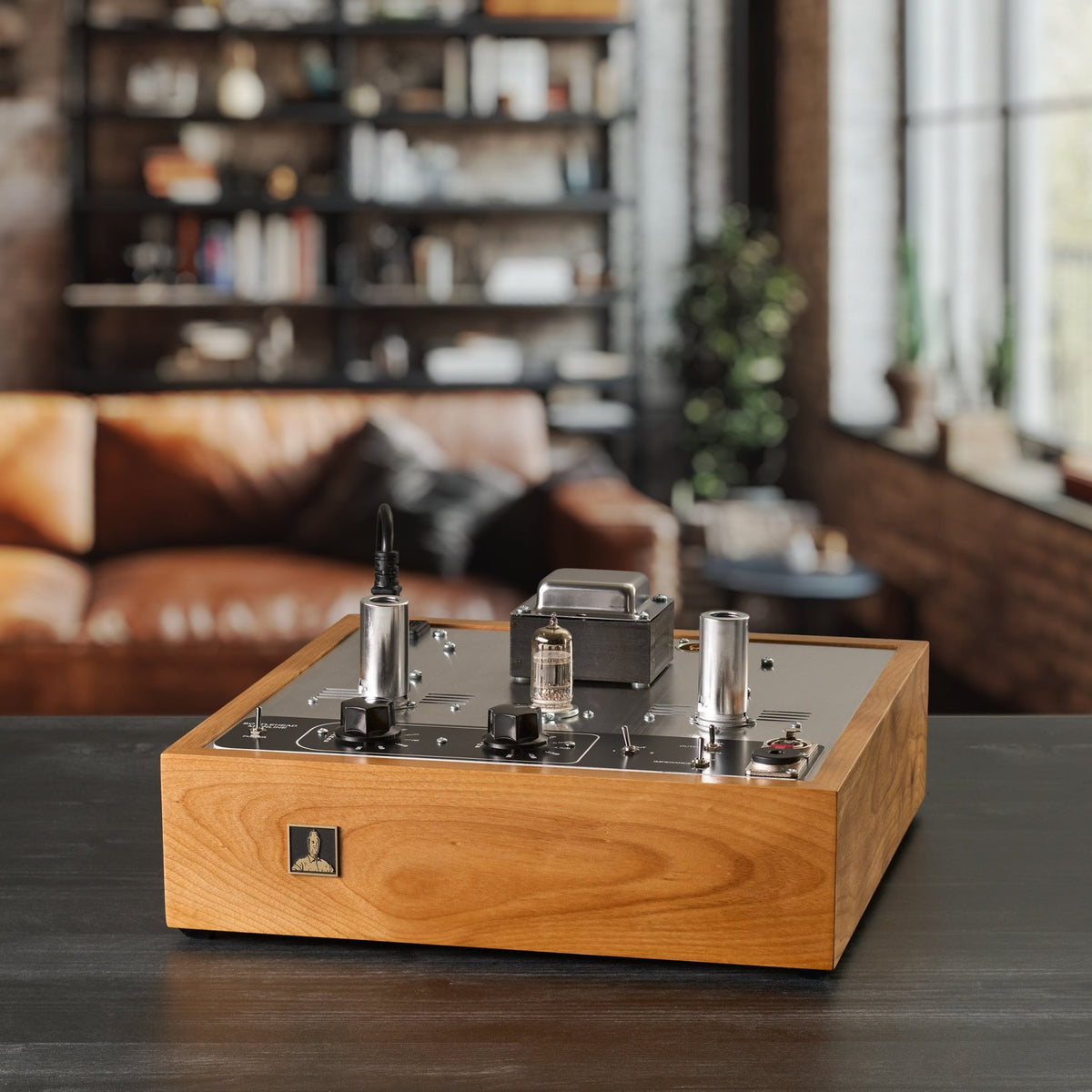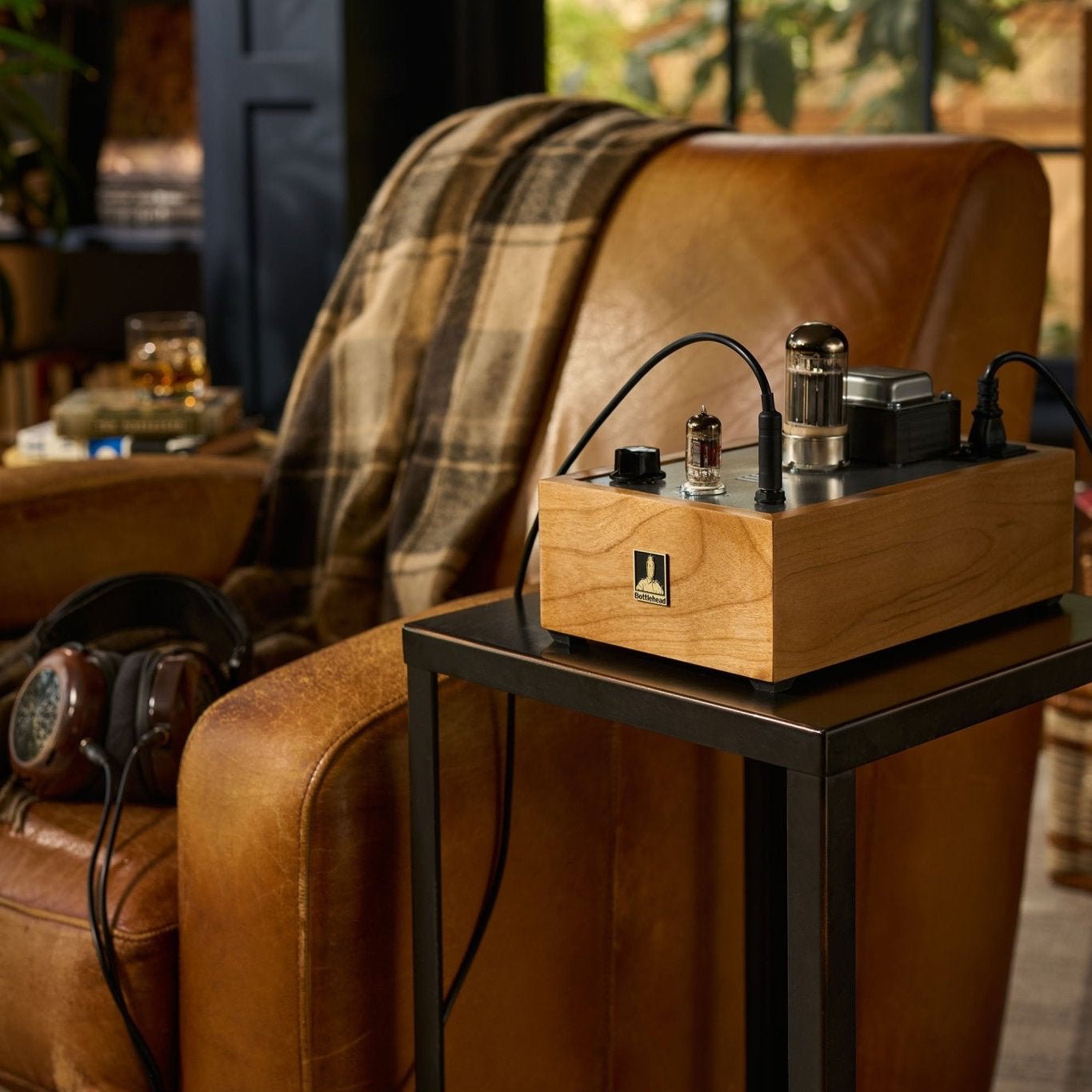

If you're reading this, you've probably heard someone say a headphone amplifier transformed their listening experience. Maybe you've wondered whether it's hype. Maybe you're trying to figure out if your headphones actually need one. Or maybe you're looking at your first tube amplifier and trying to decide where to start.
Let's begin with the basics.
What Does a Headphone Amplifier Do?
A headphone amplifier takes the small audio signal coming from a source and provides the voltage and current necessary to properly drive a pair of headphones. That sounds simple enough, but not all headphones are equally easy to drive.
Some headphones can reach reasonable listening levels from a phone or laptop. Others may technically get loud enough, but never perform at their full potential because the source lacks the power or control needed to get the best out of them.
A dedicated headphone amplifier can improve:
- Dynamics and impact
- Bass control
- Clarity and detail retrieval
- Soundstage and imaging
- Overall listening engagement
The improvement isn't always about playing louder. In many cases it's about helping the headphones perform the way their designers intended.
Do You Need a Headphone Amplifier?
Well, it depends on your headphones.
As a general rule, higher-impedance headphones tend to benefit more from dedicated amplification than low-impedance models. Headphones from companies like Sennheiser and our friends at ZMF Headphones often use higher-impedance designs that can benefit significantly from a good amplifier.
Many listeners first investigate dedicated amplification when purchasing headphones such as the ZMF Atrium, Sennheiser HD 600, Sennheiser HD 650, or Sennheiser HD 800S. While these headphones can sound good straight from audio sources, they can sound exceptional when paired with the right amplifier.
The Bottlehead Crack and Crackatwoa, for instance, were designed specifically for these sorts of high-impedance headphones.
Solid State vs Tube Amplifiers
One of the first decisions you'll encounter is whether to choose a solid-state amplifier or a tube amplifier. Neither approach is inherently better; they simply prioritize different things.
Solid-State Amplifiers
Solid-state amplifiers use transistors to amplify signals rather than vacuum tubes.
They are typically:
- Compact
- Efficient
- Low maintenance
- Highly linear
- Extremely quiet
Many modern solid-state amplifiers deliver excellent measurements and more power than most listeners will ever need. If your primary goal is maximum neutrality, a well-designed solid-state amplifier is a strong option.
Tube Amplifiers
Tube amplifiers use vacuum tubes as part of the amplification process.
While every design is different, tube amplifiers are often appreciated for qualities such as:
- Dimensional soundstaging
- Harmonic richness
- Natural timbre
- Engaging vocal presentation
- A sense of realism and presence
Many listeners describe the experience as less analytical and more emotionally involving. The best tube amplifiers preserve the humanity in the recording and make you want to listen to one more album. Then another. Then another.
Why High-Impedance Headphones and Tube Amplifiers Work So Well Together
Many classic tube headphone amplifiers, including the Crack, are designed around a topology called OTL, or Output Transformer-Less. OTL amplifiers tend to pair exceptionally well with high-impedance headphones. It's one reason headphones from Sennheiser and ZMF are so frequently discussed alongside tube amplification.
When properly matched, listeners often experience:
- Greater openness
- Better spatial presentation
- More natural midrange reproduction
- Rich but controlled bass
- Long-term listening comfort with less fatigue
The result is often a more immersive sound that listeners love.
Why Build a Headphone Amplifier Instead of Buying One?
We bought Bottlehead in 2025 after years of being customers, so we can say this with absolute certainty: building a headphone amplifier is so much better than buying one. It's addictive, it's educational, it's fun, and when everything is assembled you feel a real sense of pride.
Over the course of building Bottlehead kits, we've learned a lot about:
- Basic electronics
- Soldering skills
- How signal flows through a circuit
- Troubleshooting techniques
- How audio equipment actually works
When you build something yourself, you're no longer dependent on a black box. You know what's inside, you know how it works, and if something ever goes wrong, you're often capable of fixing it yourself. And if you need help along the way, our Forums are a great resource.
For many people, the educational value becomes just as rewarding as the finished amplifier.
What Makes a Good First Tube Amplifier Kit?
People shopping for their first tube amplifier understandably often focus entirely on sound quality, but that's only part of the equation.
A truly great first project should offer:
- Detailed instructions with clear photos
- Logical assembly sequence
- Strong safety guidance
- Accessible, responsive technical support
We realize most first-time builders are not electronics engineers. They're music lovers. A good kit should be designed with that reality in mind.
Why Bottlehead Has Become a Popular First Serious Tube Build
For more than two decades, Bottlehead has focused on a simple idea: A first project shouldn't feel like a compromise.
Like many things, DIY kits exist on a spectrum. Many beginner kits are inexpensive because corners are cut, and many advanced kits offer excellent performance but assume a level of experience that new builders don't yet possess.
We think we occupy a different space. Our goal is to create kits that are approachable enough for a first-time builder while delivering sound quality capable of satisfying experienced enthusiasts for years. In fact, many serious audiophiles consider our kits their endgame setup.
Detailed Manuals Instead of Schematics Alone
One of the biggest barriers to entering DIY audio is documentation. Most people don't want to (or can't!) decode a schematic and guess what happens next. That's why Bottlehead kits include detailed step-by-step manuals with photographs throughout the build process.
For many builders, the manual becomes an educational resource as valuable as the amplifier itself.
Designed to Teach
Bottlehead kits are learning experiences just as much as they are audiophile equipment. Many customers build their first amplifier on their own, but others build with their families and friends. We've heard from customers who use the kits as introductions to electronics, soldering, and engineering fundamentals. Just the other day we received an email from another customer telling us how they built their Crackatwoa with friends.
Regardless of who you're building with, the goal isn't simply to finish the project. The goal is to learn new skills, or sharpen old ones, on audio equipment designed to last a lifetime. That brings us to our next point...
Built to Be Maintained
Most consumer electronics are designed to be replaced, but Bottlehead products are designed to be understood, serviced, modified, and enjoyed for decades. That philosophy influences everything from circuit design to documentation.
The result is equipment that can grow with you, and that you can pass down to your kids (or some lucky friends).
Upgrade Paths and Experimentation
Many Bottlehead products offer upgrade options that can be added later. We encourage builders to start with a stock amplifier and gradually explore upgrades when they've become familiar with the sound. That ensures they're starting from a working amp and makes the impact from the upgrades even more apparent.
That means your first build often doesn't have to be your last learning experience or audio adventure.
Community Support
We know that learning is easier when you're not learning alone. Bottlehead maintains an active user forum where builders share experiences, troubleshooting advice, modifications, and listening impressions. Questions are answered by experienced builders, long-time community members, and members of the Bottlehead team.
For many customers, the community becomes part of the product.
Which Bottlehead Headphone Amplifier Should You Start With?
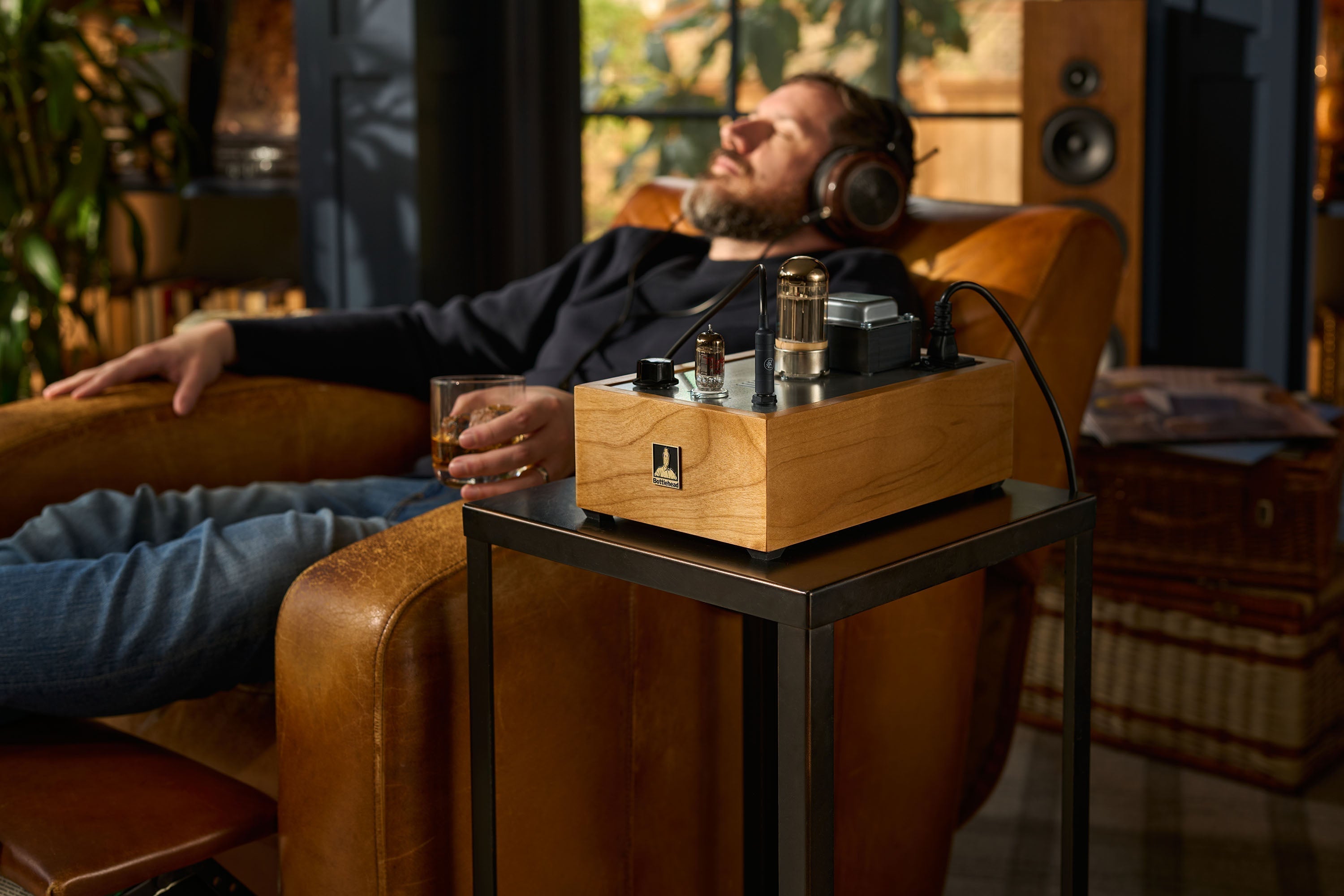
Again, that depends. For many listeners and new builders, the answer is the Crack 1.1 OTL Headphone Amplifier, which is specifically designed to excel when used with high-impedance headphones.
The Crack has a proven design with a long track record. It has become a favorite pairing with high-impedance headphones from Sennheiser, Beyerdynamics, and ZMF because it combines exceptional value, straightforward assembly, and upgrade potential via the Speedball kit.
As with all Bottlehead kits, our customers rave about our extensive documentation and strong community support.
But most importantly, it delivers the kind of listening experience that helps people understand why tube amplification remains relevant decades after vacuum tubes disappeared from most consumer electronics.
Final Thoughts
The best headphone amplifier isn't necessarily the most expensive one. Instead, it's the one that helps you connect more deeply with your music. For some people, that's a solid-state amplifier, while for others, it's a tube amplifier.
For many music lovers, building a tube amplifier becomes part of the hobby itself. You gain new skills and confidence, and at the end of the process, you have something increasingly rare in modern consumer electronics: a piece of equipment you understand because you built it yourself.