

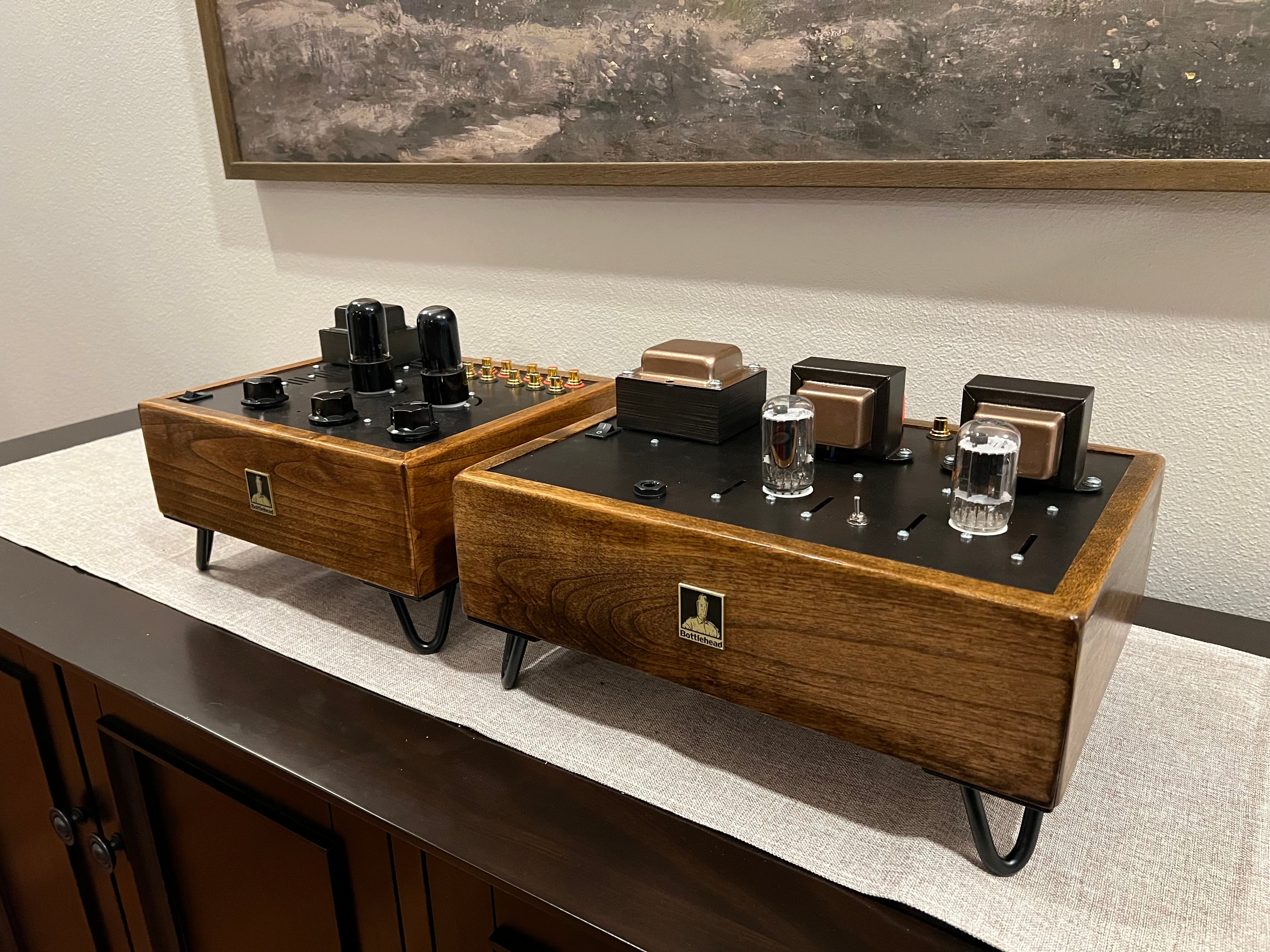
Tube amps are heavy, awkward, and full of parts that don’t like being shaken around. Dense transformers don't mix well with glass tubes or glued wood bases, especially when the UPS guy tosses the box across the dock.
Here's how to give your amp the best chance of survival when you're shipping your amp to a new buyer, or over to us for a repair.
Remove the Tubes
Do not ship an amp with tubes installed. Pull them out, wrap each tube individually in bubble wrap, and pack them in a separate smaller box if possible. Label them so the recipient knows where they go.
If you leave tubes in the sockets, you’re begging the carrier use them as levers to destroy your tube sockets and your valuable valves.
Protect the Chassis and Base
Aluminum plates scratch easily. Wood bases dent and crack.
If you're concerned about the finish while in transit, wrap the amp in a soft layer first (foam sheet, paper, or cloth), then bubble wrap. Some say not to let bubble wrap sit directly on a finished surface if you can avoid it (apparently it can leave marks), but we haven't had much trouble.
Immobilize Everything
Movement inside the box is what causes damage, and our gravity-mounted chassis are easily separated from the base while in transit if not restrained. We recommend using 0.75" or 1" (1.9 cm or 2.54 cm) painters' tape along the seams where the plate sits inside the base's rabbets. Extend the tape down the side of the wood base to help keep the tape in place. Then add a couple more strips across the chassis plate for insurance. The painter's type masking tape will leave no residue and will not harm painted finishes.
Wrap the amp or preamp with 12" wide bubble wrap, around the 10" long sides. Use an 8-foot length of bubble wrap to create several (like 3 or 4) layers. We use adhesive bubble wrap, but regular bubble wrap secured by masking tape will work just fine.
Once the amp is wrapped, place it in a box with at least 2–3 inches of padding on all sides. We use packing peanuts. Don't skimp on the peanuts, you want that sucker packed full so the amp can't move in shipping. And don't skip either padding step.
We recommend shipping your taped-up amp upside down to minimize impact.Shake the box lightly before sealing. If anything moves, fix it.
Double Box It
Crappy boxes are the source of most damage. We buy sturdy shipping boxes and recommend you do too. If you don't have one (or if you want to), double box the amp like this:
-
Inner box: amp, fully wrapped and immobilized
-
Outer box: another 2–3 inches of padding on all sides
This dramatically reduces the chance of impact damage.
Secure Loose Parts
If the amp has anything removable (e.g., knobs, feet, cages),take them off and pack them separately.
Anything loose will either get lost or turn into a projectile inside the box.
Label It, But Don’t Rely on Labels
“Fragile” and “This Side Up” labels don’t hurt, but don’t assume they’ll be followed.
Pack like the box will be dropped, flipped, and stacked under something heavy. Because it will be.
Insure It
If you’re shipping something you care about, insure it for full value. Shipping damage claims are annoying, but having no coverage is worse.
We've also written a PDF for customers shipping their Bottlehead product to us for repair. Anyone can download this instruction manual.

Which Bottlehead headphone amplifier is right for me?
What Is a Headphone Amplifier? A Practical Guide for Music Lovers